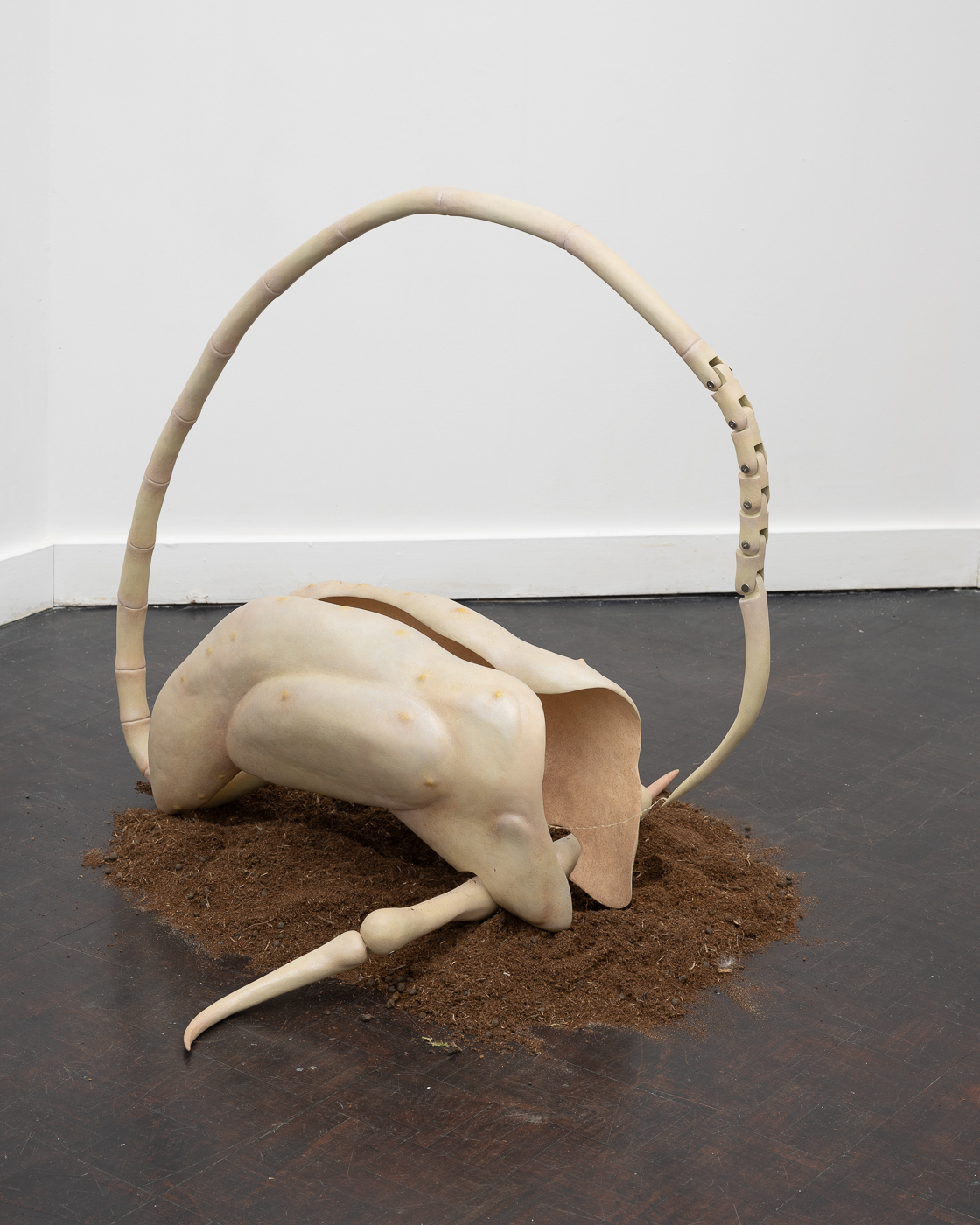
Uprise draws inspiration from the religious festival of Thesmophoria celebrated by women in ancient Greece. Every year, in late autumn, the women of ancient Greek city-states stay together in caves on the outskirts of the city for three days and three nights. On the first day of the festival, which is called anodos, meaning “uprising,” they would dig up the rotten remains of piglets buried in pits the previous year. On the second day, they would mix dirt and seeds together, keep silent during the day, and begin to chant and dance at sunset. On the third day the women each received a portion of the carrion mixture and plant the sacred seeds in their own fields.
I was fascinated by the contrast between the power of “death” represented by the rotten flesh and the restraint and reverence assigned to “life.” In this ritual, women use their bodies, actions and symbols of objects to relay their perception of nature from their physical experience, using “death” to feed and sacrifice to the earth, and thus praying for a better “life.”